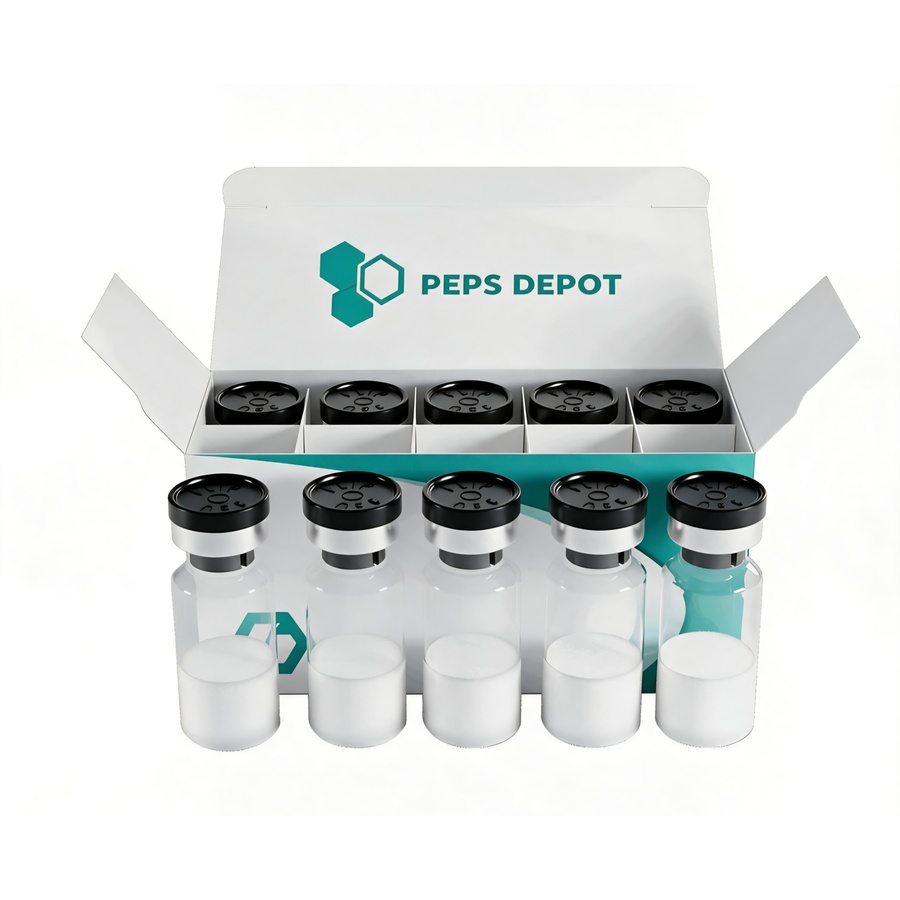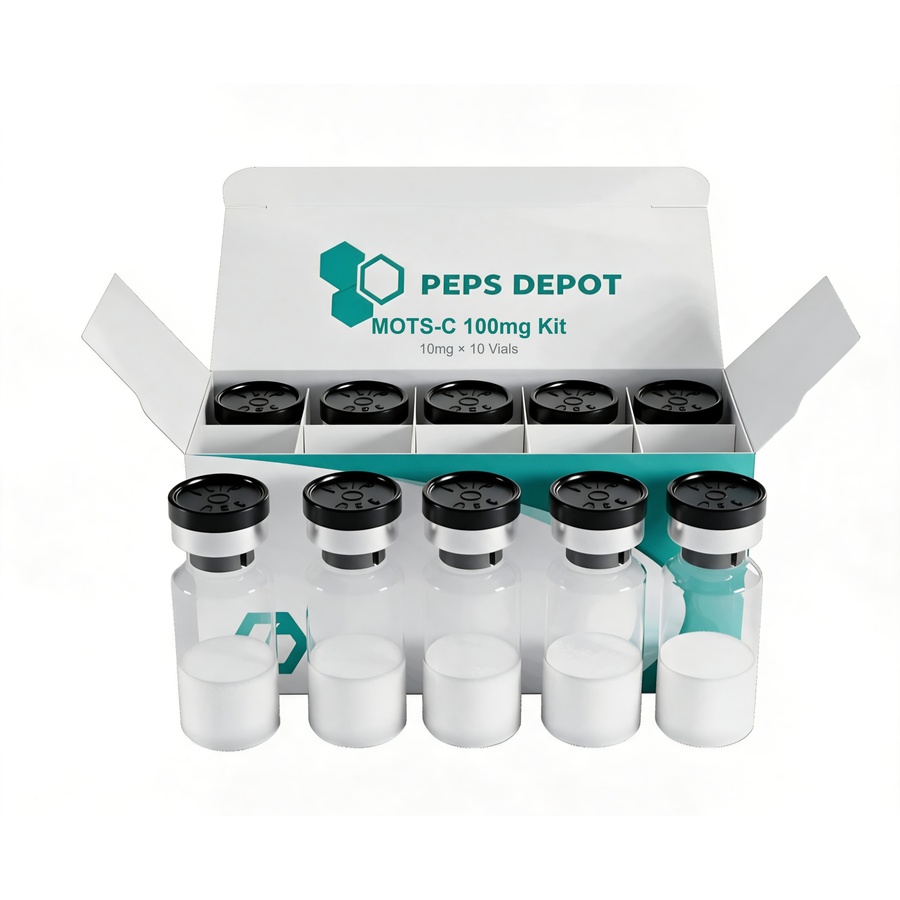
MOTS-C 100mg Kit
MOTS-c is a mitochondrial-derived peptide studied for its role in metabolic homeostasis, insulin sensitivity and cellular energy regulation.
- ✅ Order today › 📦 Dispatch (2 business days) › 🚚 Delivery (3–9 business days)
- 🧪 Most lab-tested source in the industry
- ⭐ 500+ reviews across independent platforms
- 🔒 Secure checkout — Crypto, Cash App & Venmo
- 📦 Discreet packaging, guaranteed delivery
Product Details
| Purity | ≥99% (LC-MS verified) |
| Form | Lyophilized powder, preservative free |
| Storage | Cool and dry; refrigerate after reconstitution |
| Batch | COA available on request |
Why Choose MOTS-C 100mg Kit?
MOTS-c is a mitochondrial-derived peptide studied for its role in metabolic homeostasis, insulin sensitivity and cellular energy regulation.
Key Benefits
- Mitochondrial-derived peptide
- Third-party tested — COA available on request
- Lyophilized, preservative free
- Ships from the USA in discreet packaging
About MOTS-C 100mg Kit
MOTS-c (mitochondrial open reading frame of the 12S rRNA type-c) is a 16-amino-acid peptide encoded not in nuclear DNA but in the mitochondrial genome. It belongs to a small class of mitochondrial-derived peptides, and its discovery established that mitochondria encode signalling molecules acting outside themselves.
This origin is what makes it distinctive: rather than being a synthetic construct or a fragment of a larger nuclear-encoded protein, MOTS-c represents a mitochondrial-to-nuclear signalling channel.
Supplied for laboratory research use only. Not for human consumption.
Research background
Mitochondrial-derived peptide signalling
MOTS-c is translated from a short open reading frame within mitochondrial 12S rRNA. Research has examined how it moves to the nucleus under metabolic stress and influences nuclear gene expression — a retrograde signalling pathway.
AMPK pathway activation
A recurring finding is activation of AMP-activated protein kinase, the cellular energy sensor. AMPK activation is associated with shifts in glucose uptake and fatty-acid oxidation, which forms the basis of the metabolic research interest.
Folate-methionine cycle interaction
Early mechanistic work described interaction with the folate-methionine cycle and consequent effects on purine biosynthesis, linking the peptide to one-carbon metabolism.
Exercise and metabolic models
Animal studies have examined MOTS-c in the context of exercise adaptation and age-related metabolic change, where mitochondrial function is the common thread.
The literature is preclinical — cell culture and animal models, with limited human data. MOTS-c is not an approved drug.
Reconstitution
- Equilibrate firstAllow the vial to reach room temperature before opening. Introducing solvent into a cold vial promotes condensation, which affects both concentration accuracy and stability.
- Select the diluentBacteriostatic water — sterile water with 0.9% benzyl alcohol — is standard where the solution will be held for more than a few days. Plain sterile water is appropriate only for single-session use with no storage.
- Add slowly, down the wallDirect the solvent against the inner wall of the vial rather than onto the powder. A stream striking the lyophilized cake causes localized shear that can denature peptide chains.
- Do not shakeSwirl gently, or simply let the vial stand. Agitation introduces air and mechanical stress, and both degrade peptides. Full dissolution usually takes a minute or two.
- Inspect before useA correctly reconstituted solution is clear and colourless. Cloudiness, visible particulate or discolouration indicates a problem with the material or the diluent.
Concentration is set by the volume of diluent added. For a 10mg vial, 2mL of bacteriostatic water yields 5mg/mL. Calculate the working concentration your protocol requires rather than following a generic figure.
Storage and stability
| State | Temperature | Practical shelf life |
|---|---|---|
| Lyophilized, sealed | −20 °C | 24+ months |
| Lyophilized, sealed | 2–8 °C | ~12 months |
| Lyophilized, sealed | Room temperature | Weeks — transit only |
| Reconstituted, bacteriostatic water | 2–8 °C | ~3–4 weeks |
| Reconstituted, sterile water | 2–8 °C | Same session |
Lyophilized peptide is stable enough to survive shipping at ambient temperature, which is why cold-chain courier service is not required for transit. Long-term storage is a different matter — material intended to be held for months belongs in a freezer.
Protect from light, and avoid repeated freeze-thaw cycles. Each cycle causes measurable degradation, so dividing a reconstituted stock into single-use aliquots before freezing is preferable to thawing and refreezing one vial repeatedly.
Purity and verification
Every lot is tested by an independent laboratory using two orthogonal methods. HPLC (high-performance liquid chromatography) establishes purity as a percentage of total peptide content, separating the target compound from truncated sequences and synthesis by-products. LC-MS (liquid chromatography–mass spectrometry) confirms molecular identity by mass.
Both matter. Purity alone is insufficient — a 99% pure sample of the wrong compound is still the wrong compound. Together the two tests establish identity and quality, which is why MOTS-c is released only after both pass.
The certificate of analysis references the lot number printed on your vial label. Request the COA for your lot at [email protected].
Published research
Peer-reviewed studies indexed in PubMed. Each links to the abstract and, where a free copy exists, to the full text. We link primary sources rather than summarising them second-hand.
The mitochondrial-derived peptide MOTS-c promotes metabolic homeostasis and reduces obesity and insulin resistance
MOTS-c: A promising mitochondrial-derived peptide for therapeutic exploitation
Mitochondrial-derived peptides MOTS-c and humanin attenuate dexamethasone-induced atrophy in human skeletal muscle cells
Frequently asked questions
What makes MOTS-c different from other peptides?
How do you reconstitute MOTS-c?
What is AMPK and why does it come up in MOTS-c research?
Does this need refrigerated shipping?
Is a certificate of analysis available?
Is MOTS-c approved for human use?
Customer reviews
Related compounds
Compounds studied alongside this one, or acting through related pathways.
Related products